Arabic Books with Audio: Pronunciation, Listening and Guided Repetition
In brief
Discover how learning Arabic with audio support transforms your progress in pronunciation and listening comprehension. This guide presents methods combining listening, repetition and reading, essential for mastering the specific sounds of Arabic.
We compare books accompanied by CDs, QR codes or audio applications, and explain how to use them effectively in your daily life (commuting, housework, walking). Active listening techniques and shadowing (simultaneous repetition) are detailed to accelerate your learning. Whether your goal is to understand the Quran in Arabic, communicate in Modern Standard Arabic or master a dialect, find the audio method that suits you from our selection.
Audio accelerates Arabic pronunciation if you follow a simple protocol. Instead of listening passively, a structured strategy transforms each session into measurable progress. This guide presents the best audio formats, a proven 15-minute method, and routines tailored to your profile - child or adult.

What audio formats exist for Arabic books - QR, MP3, app?
Modern Arabic books offer three complementary audio formats. The first is the QR code integrated into the book: you scan a page with your phone and instantly access the pronunciation.
The second is the CD or MP3 file provided with the book, ideal for downloading and organizing in your player. The third format is the mobile application: some publishers offer a dedicated app to synchronize written text with audio.
Each format meets a distinct need. The QR code is perfect if you practice with the physical book. MP3 files allow you to study without an internet connection, especially in the car or public transport.
The mobile application offers an interactive experience, often with advanced features like variable speed or recorded exercises.
In Arabic, we speak of سمع (sam' - listening) and نطق (nutq - pronunciation). These two elements are inseparable: without listening, pronunciation remains approximate; without the effort to pronounce, listening alone is not enough.

Arabic Between Your Hands - New Edition with QR code - Level 1
The classic for starting Arabic with a progressive approach. Each lesson is accompanied by QR codes providing access to native pronunciation. Perfect for beginners.
25,00 EUR
View offerWhat 15-minute protocol should you follow to improve your pronunciation?
A structured protocol is the key to getting the most out of audiobooks. The 15-minute method is divided into four sequential phases, each playing a crucial role in your progress.
Phase 1 - Listening (3 minutes): Start by listening without reading or repeating. Let your ear get used to the rhythm, intonation and native pronunciation. This first passive listening implants sound patterns in your memory.
Phase 2 - Repetition (5 minutes): Stop the player after each word or sentence and repeat out loud. Mimic the native pronunciation. This active phase activates your motor memory and gradually corrects your accent.
Phase 3 - Recording (4 minutes): Use the voice recorder application on your phone to record your own voice reading or repeating the same passage. Don't worry about quality: the goal is to create a personal audio reference.
Phase 4 - Comparison and correction (3 minutes): Listen to the native audio, then immediately your recording. Identify the differences: which syllable are you missing? Which sound are you mispronouncing? Note the points to improve for the next session.
This technique is called shadowing or simultaneous repetition. It comes from the learning method of professional interpreters. By repeating in real time while listening, you synchronize your articulatory apparatus with the native model.
With Arabic, whose pronunciation requires particular precision, shadowing is particularly effective.
How to avoid the pitfalls of passive listening?
The most common mistake is confusing passive listening with active learning. Listening to an Arabic podcast while doing something else does not help you progress. You hear the sounds, but your brain does not create the necessary connections to improve your pronunciation.
In Arabic, we distinguish استماع (istima' - active, focused listening) from simply hearing sounds without the intention to learn. Istima' requires concentration, reactivity and voluntary engagement with the content.
Common pitfalls include: listening too fast (you cannot keep up and become discouraged), not practicing repetition (listening alone does not fix anything), skipping personal recordings (you do not compare your progress), and giving up after a few days (pronunciation takes time).
To maintain true active listening, establish a dedicated environment: a quiet place, free from distractions, with your book and a way to record. Set aside 15 minutes each day rather than long and irregular sessions.
Consistency matters more than duration.

L'arabe entre tes mains - Level 2
After mastering level 1, progress to more complex grammatical structures. Still accompanied by QR codes for pronunciation. Ideal for consolidating your Arabic accent.
21,00 EUR
View offerWhat audio routines to adopt according to your profile - child vs adult?
Audio learning works best when it is adapted to your age and lifestyle. Children and adults do not have the same attention spans or the same educational needs.
Routine for children (5 to 10 minutes per day): Children learn best through play and playful repetition. Prioritize books with attractive illustrations and interactive sounds.
Sound games - guessing a letter by its sound, completing a sentence with the correct pronunciation, telling a story in echo - transform listening into pleasure. Limit to 5-10 minutes daily to maintain interest.
A session can take place after school or in the morning before other activities. Consistency is essential: 10 minutes every day is better than a 40-minute session once a week.
Routine for adults (15 to 20 minutes per day): Adults have better concentration but less free time. Optimize by practicing during "dead" periods: car commutes, walking, physical exercise.
Use MP3 files or the mobile application to study away from home. Structured repetition works better than play: an adult session follows the 15-minute protocol described earlier.
Gradually extend to 20 minutes by adding time for review and consolidation.
For both profiles, establish a fixed routine: the same time, the same place, the same tools. Your brain adapts to habits. After a few weeks, active listening becomes natural.

Medina Method Pack + Arabic in Your Hands
Begin your Arabic learning with this pack that combines two complementary methods: the rigor of the Medina Method and the progressiveness of Arabic in Your Hands. Both include audio resources to refine your pronunciation. A winning combination for beginners and false beginners.
38,90 EUR
Discover the pack
Frequently Asked Questions About Arabic Books with Audio
Is a book with audio enough to pronounce Arabic well?
An audio book is an excellent start, but perfect pronunciation requires a multimodal approach. Audio exposes you to native sounds, but you must also: study pronunciation rules (positions of lips, tongue, throat), practice regular repetition, and ideally receive feedback from a native speaker or teacher.
However, with the 15-minute protocol and daily commitment, you will quickly achieve a comprehensible and natural accent.
What equipment is needed for audio learning of Arabic?
Minimal equipment includes: an Arabic book with audio resources (QR code, CD or app), a phone or computer to scan codes or download files, and headphones or a speaker for good sound quality.
Optionally: a voice recorder app to record your voice, a notebook to note pronunciation difficulties, and a timer to structure your 15-minute sessions. Nothing expensive or complicated: a phone is enough.
Is Arabic in Your Hands the best book with audio for pronunciation?
Arabic in Your Hands is among the best, especially since the new edition integrated QR codes for each lesson. Its strengths: gentle and playful progression, clear pronunciation from the native speaker, and easy-to-follow grammatical organization.
It excels for beginners and young learners. For more intensive learning or a more formal grammatical approach, the Medina Method is an excellent complement. The choice depends on your style: do you prefer a light and accessible work or a more structured method?
Can you learn Arabic in the car with audiobooks?
Yes, but with limitations. Passively listening to audio while driving is not enough. You cannot repeat, record your voice, or consult the text simultaneously. However, you can use car time for basic listening and familiarization.
Then, during your structured 15 minutes at home, repeat and record. A combination works well: passive listening in the car (exposure), active repetition at home (learning). Thus, you make the most of your free time without compromising learning quality.
How do you evaluate your progress in Arabic pronunciation?
The most reliable evaluation is to compare your recordings over time. Keep your personal audio files from each week. Every month, listen to your initial recordings: you will notice clearer pronunciation, more fluent accent, better mastery of difficult sounds (ح, ع, غ, or pharyngeal sounds).
You can also: self-evaluate on a scale (0 = incomprehensible, 10 = native), ask an Arabic-speaking friend for honest feedback, or use an Arabic voice recognition app that indicates errors to you.
Progress in pronunciation is never linear, but with consistency, you will see significant improvement in 8 to 12 weeks.
Additional Resources at Al-Imen
To deepen your learning, consult our related articles on the complete guide to choosing an Arabic book, the Arabic alphabet and pronunciation of letters, the best books for beginners, and our comparative guide of methods to learn Arabic.
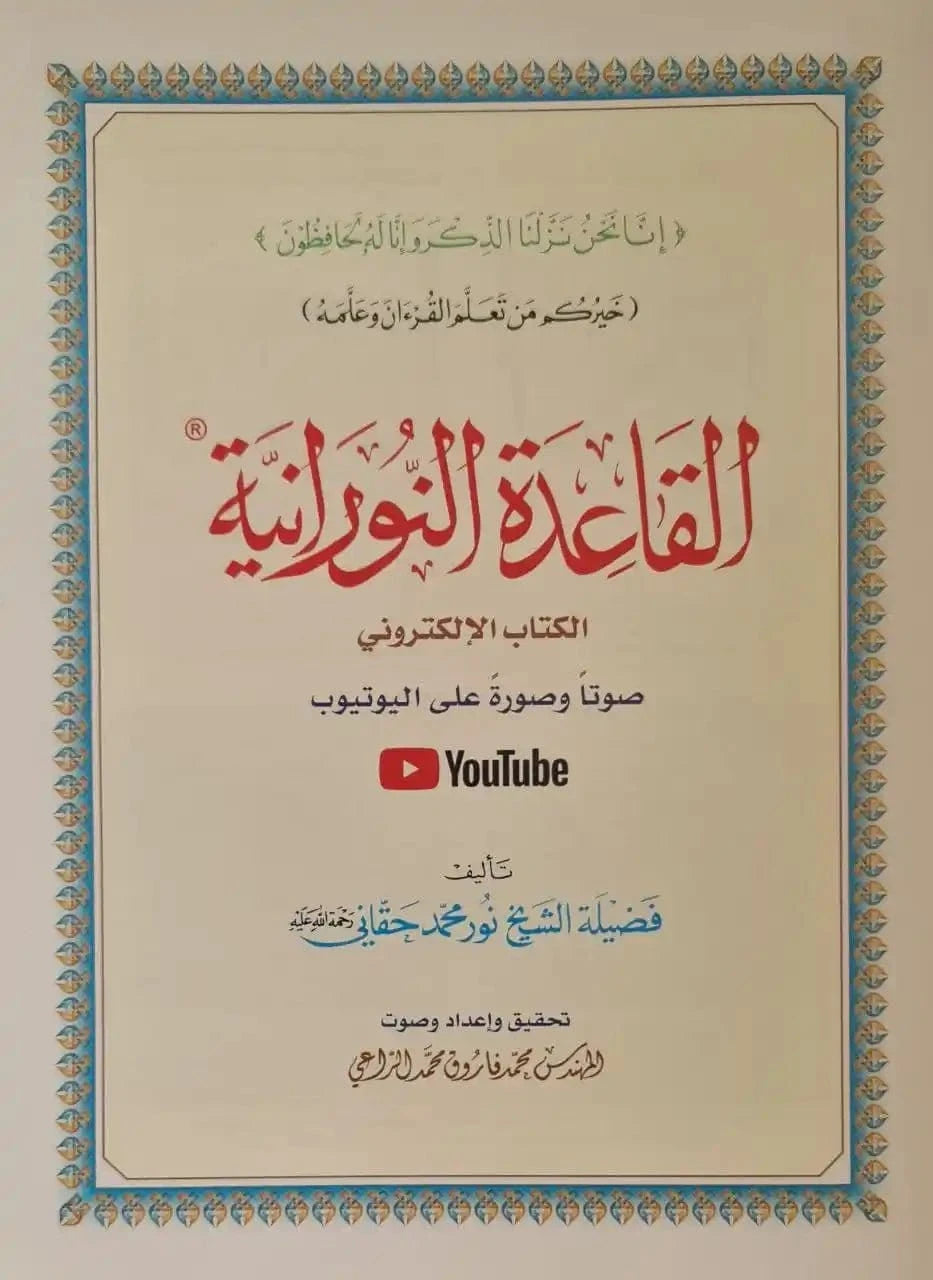
Also explore our collections: Arabic Language Learning, Editions Orientica, and Nourania.
What are the delivery times for my books?
Al-Imen delivers in mainland France within 2 to 5 working days. For Belgium and Europe, allow 5 to 10 days. Consult our shipping and delivery page for detailed rates and order tracking options.
Key Takeaways
- Audio support is essential for mastering Arabic pronunciation, as many sounds do not exist in English and can only be learned by ear.
- The shadowing technique (repeating simultaneously what you hear) considerably accelerates the acquisition of prosody and fluency.
- Integrate listening into your daily activities (commute, housework, walking) to multiply your exposure time to the language without extra effort.
- Alternate between passive listening (familiarization) and active listening (repetition, transcription) to develop both comprehension and oral production.
Choose an audio method adapted to your main objective (Quranic Arabic, standard or dialectal) and commit to listening 20 minutes a day for 3 months. Discover our books with audio support at Al-Imen.