Arabic Writing: Notebooks and Books to Learn to Write Correctly
In Brief
Discover how to choose the ideal Arabic writing notebook to progress in calligraphy and letter tracing. This guide compares the main available notebooks according to format (guided lines, dotted lines, squares), level (beginner to advanced) and objective (handwriting, Naskh or Ruq'ah calligraphy).
We detail good practices in posture, pen grip and pedagogical progression to avoid bad habits. Structured daily exercises over four weeks allow you to acquire regular and legible Arabic writing. The best writing notebooks available at Al-Imen are presented with their strengths and target audience.
Learning Arabic writing is much more than tracing letters: it is mastering a series of rhythmic gestures, understanding how letters connect with each other, and gradually building elegant and authentic calligraphy.
The خط (khatt) in Arabic means both "writing" and "calligraphy," which underscores the cultural importance of writing Arabic well. Unlike the French alphabet where each letter retains roughly the same form, the 28 Arabic letters transform according to their position in the word.
This adaptability is what makes learning fascinating, but also demanding. With a progressive approach and the right tools, you will master Arabic writing in just a few weeks.

What materials should you choose to start Arabic writing?
Before you begin, gather the essential elements that will optimize your learning. The choice of materials is important: a poor pen or unsuitable notebook can frustrate you and slow down your progress.
To get started, you need a notebook with appropriate lines or grid. Specialized notebooks for Arabic writing have double horizontal lines that help you maintain correct proportions between letters and diacritical marks.
The قلم (qalam), the pen or stylus, must have appropriate thickness: neither too thin (letters would become illegible), nor too thick (difficult to control). A classic ballpoint pen or a fountain pen with a tip of 0.7 to 1mm is perfectly suitable for beginners.
Finally, a printed or posted tracing guide will show you the exact direction of each stroke. The كتابة (kitaba), writing itself, is built progressively by repeating these gestures until they become natural.
Here are the recommended elements to get started:
- Specialized notebook: With lines adapted to Arabic letters, ideally with models to follow.
- Ballpoint pen 0.7-1mm: Black or blue color for optimal contrast.
- Soft eraser: To correct mistakes without damaging the paper.
- Graduated ruler: To maintain alignment if your notebook doesn't have predefined lines.
- Laminated tracing guide: To place under your sheet to see the trajectory while writing.
Notebook recommended by Al-Imen

My Arabic Writing Notebook
Specialized notebook with adapted lines, models to follow and progressive exercise spaces. Perfect structure to start and progress quickly in Arabic writing.
How to Master Letter Families and Their Connections?
The key to rapid progress in Arabic writing lies in understanding letter families. Rather than learning the 28 letters independently, the Arabic system groups them by similar gestures.
This approach transforms learning that would seem complicated into coherent and memorable logic.
Arabic letters are grouped into families according to their shapes and characteristic gestures. For example, the letters ب ت ث (ba, ta, tha) share the same main body: a vertical line with an anchor point at the bottom.
The only difference: the number and position of the dots. Similarly, ج ح خ (jim, ha, kha) are built around an upper hump. This organization allows you to memorize letters by patterns rather than by brute memorization.
A crucial element that many beginners neglect: connections. Not all Arabic letters connect to the next letter. Certain letters, called حروف مفصولة (huruf mafsulah, non-connecting letters), naturally interrupt the connection.
The letters و ز ر ذ د ا (waw, zay, ra, dhal, dal, alif) never connect to the next letter. Understanding this saves you frustration when composing your first words and sentences.
Here's how to progress effectively:
- Day 1-2: Learn the first family (ب ت ث) in isolation and in their four positions (beginning, middle, end, alone).
- Day 3-4: Continue with other families (ج ح خ / س ش / د ض ط ظ).
- Day 5-6: Practice how these letters connect to each other in simple words.
- Day 7+: Work on the harmony of proportions and consistency of your writing.
What are the common mistakes in Arabic writing and how to correct them?
Every learner faces the same pitfalls. By identifying them now, you will accelerate your progress and avoid creating bad habits that are difficult to correct later.
Mistake number one: writing in the wrong direction. Although this seems obvious, many beginners start from the right instead of the left, or reverse the trajectory of a letter.
This error occurs especially among French speakers used to the Western alphabet. Take the time to properly anchor the reflex: Arabic letters are written from right to left.
The second frequent mistake: ignoring or misplacing dots and diacritics. A letter without a dot (like ب without its two lower dots) becomes a different letter (ف).
These small details entirely determine the meaning and recognition of the letter. Diacritics like الفتحة (the fatha) or الكسرة (the kasra) are not optional: they completely change the pronunciation.
Third mistake: not respecting proportions correctly. Arabic is a writing system where vertical proportion matters enormously. An alif (ا) must be noticeably taller than other letters. Letters like ق ف have extensions that descend below the line.
Ignoring these proportions makes your writing incoherent and difficult to read.
Progressive correction with the right notebook

My Arabic Writing Notebook
Notebook with progressive exercises and detailed corrections. The models and explanations help you identify and immediately correct your mistakes in direction, dots, and proportions.
What plan should you follow to master writing in 14 days?
You don't need months to master the basics of Arabic writing. A structured and progressive plan over 14 days is enough. The key: modest but consistent daily commitment.
Rather than three-hour sessions once a week, scholars recommend 5 to 15 minutes every day. This regularity strengthens muscle memory and consolidates your learning much more effectively.
Here is the day-by-day plan:
| Days | Objective | Letters/Families | Duration |
|---|---|---|---|
| Day 1-2 | Basic learning and direction | ب ت ث (ba, ta, tha) | 10 min/day |
| Day 3-4 | Second family | ج ح خ (jim, ha, kha) | 10 min/day |
| Day 5-6 | Third family | س ش (sin, shin) | 10 min/day |
| Day 7 | Review of 3 families | All learned letters | 15 min |
| Day 8-9 | Non-connecting letters | و ز ر ذ د ا | 10 min/day |
| Day 10-11 | Simple words and connections | Letter combinations | 12 min/day |
| Day 12-13 | Short sentences and practice | Simple sentences from the Quran or hadith | 15 min/day |
| Day 14 | Final test and reflection | Free transcription of a short text | 20 min |
This plan is designed for beginners, children and adults alike. If you progress faster, feel free to move ahead. If you need more time, don't rush: quality comes before speed.
Resource to structure your learning

Montessori Box Set Pack
A complete educational set that integrates Arabic writing, Montessori methodology, and progressive activities. Ideal for structuring your learning over 14 days and beyond, with all the necessary tools and guides.
Towards Arabic Calligraphy: From Writing to Art
Once you master basic writing, a world opens up to you: Arabic calligraphy, or الخط العربي (al-khatt al-'arabi). Unlike ordinary writing, calligraphy is a sophisticated art with strict rules, recognizable styles and centuries-old traditions.
Major calligraphic styles include Naskh (readable and classical), Thuluth (elegant and decorative), Diwani (formal and ornamental) and Rouq'a (cursive and fast). Each has its specific proportions and distinct techniques.
Although some styles require formal training, all begin with the same foundation: correct and mastered Arabic writing.
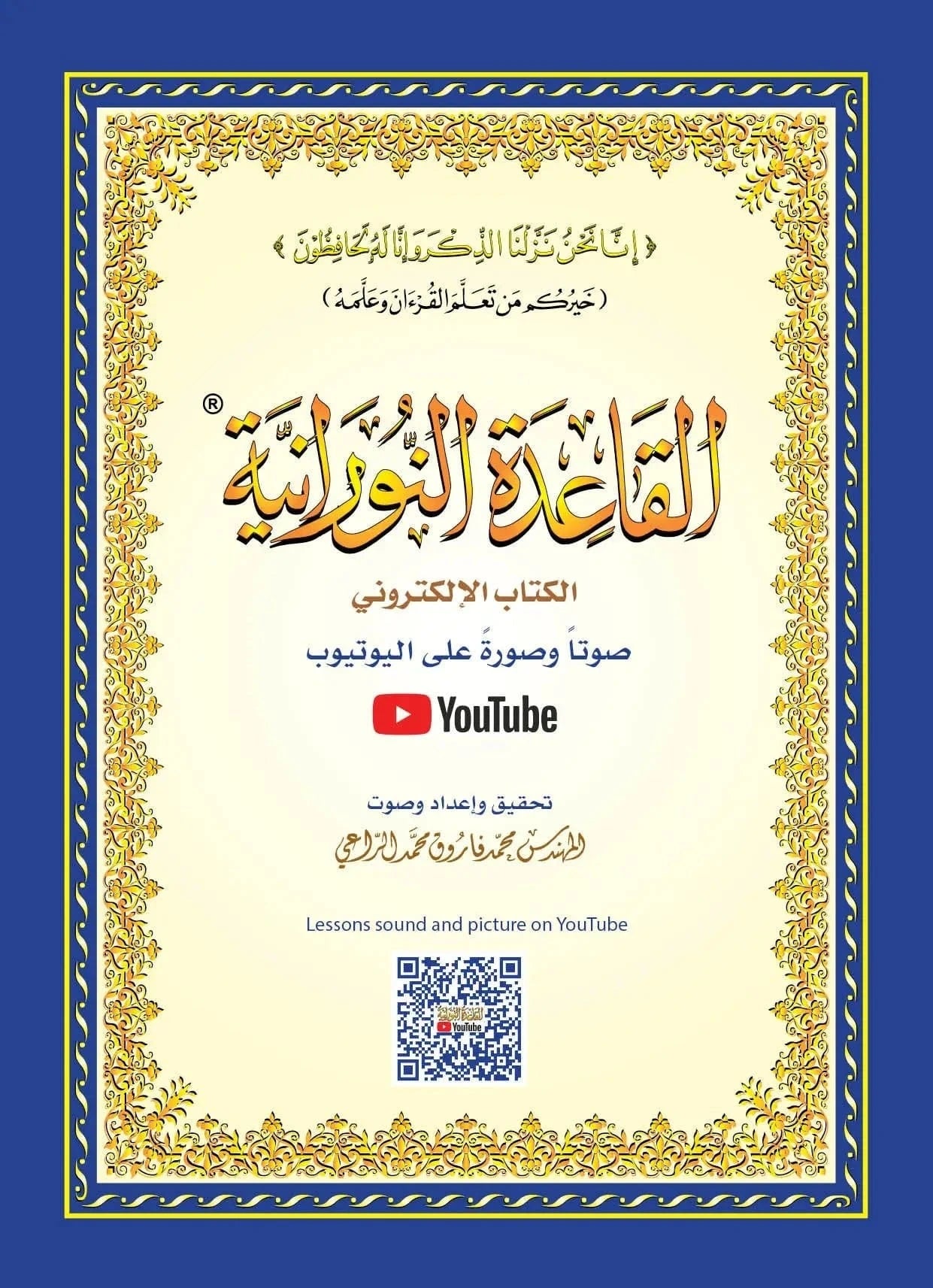
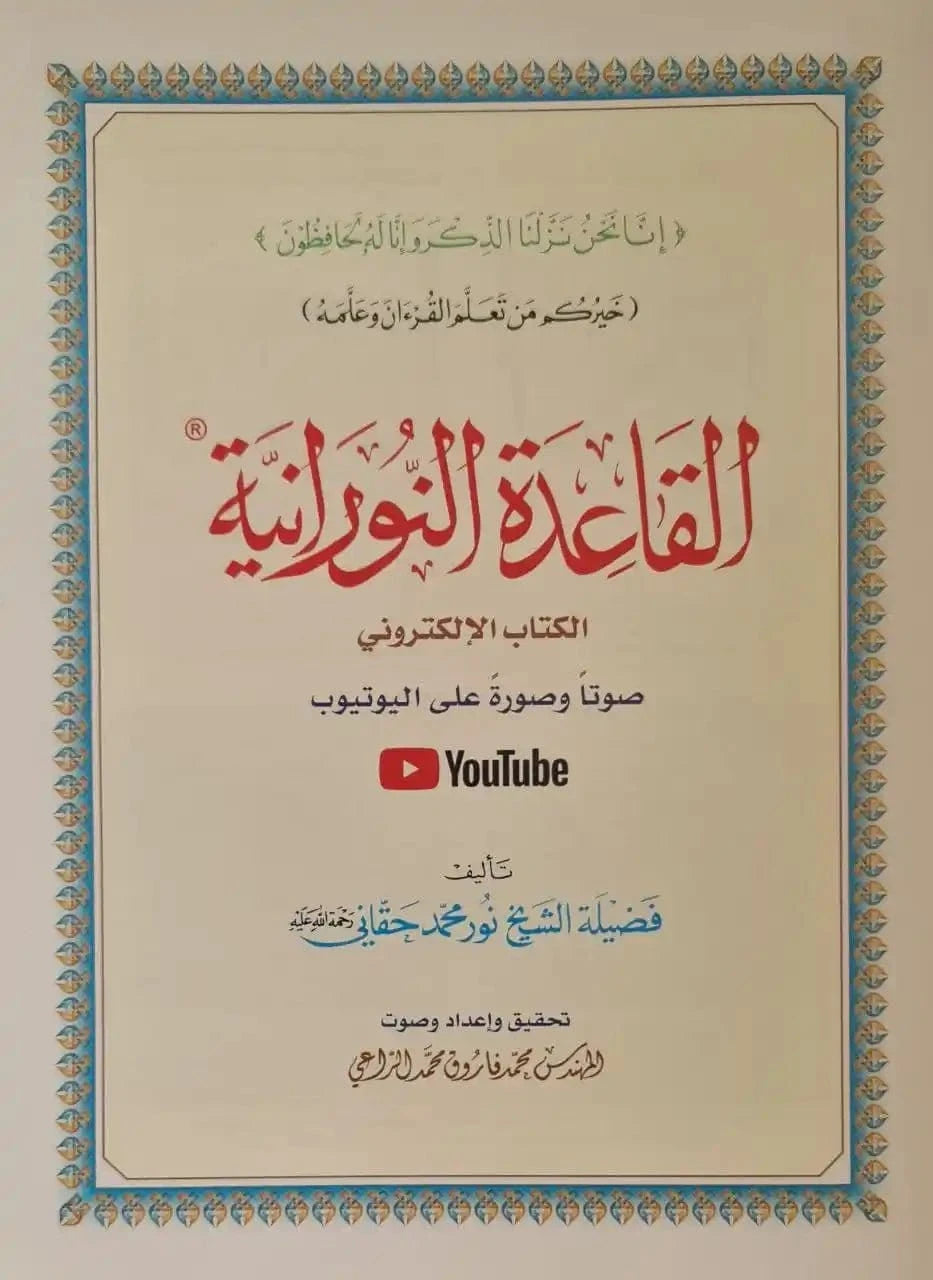
If you wish to progress towards calligraphy, explore our complete Arabic language learning collection or discover our specialized Nourania resources for advanced steps.
How to structure your practice for lasting results?
Beyond the 14-day plan, your success depends on the quality of your practice. Three fundamental principles ensure sustainable progress:
Principle 1: Deliberate slowness. The slower you write, the more your brain registers precise gestures. Verify each letter, each dot, each connection before moving to the next one.
One page of 5 well-executed words is worth more than 20 hasty words.
Principle 2: Intelligent repetition. Do not simply reproduce the same lines a hundred times. Vary the contexts: a letter alone, then in a word, then in a sentence.
This variation strengthens muscle memory in real situations.
Principle 3: Critical self-evaluation. Compare your writing to the models. Identify precisely what differs: a letter too large, a dot misplaced, a missing connection. This metacognition accelerates your learning exponentially.
To deepen your learning method, consult our complete guide to choosing the best books and our article on the Arabic alphabet and pronunciation.

Recommended complete learning paths
Once you have mastered the basics of writing, your natural progression will lead you to learn vocabulary, grammar, and fluency. Here are the steps that follow logically:
Discover our thematic collections to continue your journey:
- Collection Editions Al-Hadith : Workbooks and specialized books to progress methodically.
- Collection Editions Tawhid : High-quality educational resources with corrections and guides.
- Arabic Language Learning Collection : All levels, from beginner to advanced.
For other articles in this series, consult:
Frequently Asked Questions About Arabic Writing
Do I need a special notebook to write Arabic?
Specialized Arabic notebooks are not mandatory, but they are highly recommended for beginners. These notebooks have double horizontal lines that help maintain correct proportions and often include models to follow.
A regular notebook with fine grid lines can be sufficient if you pay attention to proportions, but a specialized notebook significantly speeds up learning and reduces proportion errors that slow progress.
How long does it take to write Arabic correctly?
To master the basics and write legibly, 2 to 4 weeks of daily practice are sufficient (10-15 minutes per day). To achieve elegant and automatic writing, 2 to 3 months of regular practice are necessary.
The timeline depends on your consistency, your age, and your motor skills. Children often progress more slowly than adults at first, but they build lasting habits.
What matters is regularity rather than intensity.
How do I teach Arabic writing to a child?
With children, prioritize play and gradual progression. Start with fine motor activities (tracing lines, curves) before introducing letters. Use notebooks with models they can follow easily.
Limit sessions to 5-10 minutes per day for young children (4-6 years old) and 15-20 minutes for older children (7+). Encourage, celebrate progress, and never force.
A playful Montessori-based or game-based approach transforms learning into an enjoyable activity rather than a chore. Discover our complete guide for teaching Arabic to children.
What is the difference between Arabic writing and calligraphy?
Arabic writing is the daily and functional use of letters: writing notes, letters, messages. It should be legible and correct, but not necessarily artistic. Arabic calligraphy is the art of forming letters with excessive aesthetic beauty, following recognized styles such as Naskh, Thuluth, or Ruq'a.
Calligraphy requires superior technical mastery, strict proportion rules, and often formal training from a master. Every calligrapher must first master regular writing; it is the indispensable foundation.
Can I learn Arabic writing without knowing the alphabet?
No, it is not recommended. Knowing the alphabet and the pronunciation of letters helps you understand the underlying gestures and retain the shapes more easily. Moreover, knowing how a letter is pronounced anchors your kinesthetic learning.
However, some Montessori programs start with shape before pronunciation. A balanced approach combines simultaneous learning of shape and sound. Consult our detailed article on the Arabic alphabet and pronunciation for perfectly coordinated learning.
What are the delivery times for my books?
Al-Imen delivers in mainland France within 2 to 5 business days. For Belgium and Europe, allow 5 to 10 days. Consult our shipping and delivery page for detailed rates and order tracking options.
Key Takeaways
- A good Arabic writing notebook offers guided lines suited to your level, with progression from tracing isolated letters to writing complete words.
- Consistency matters more than quantity: 15 minutes of daily writing produces better results than one hour per week.
- Choose notebooks that teach the four forms of each letter (isolated, initial, medial, final) from the first lessons.
- Posture and pen grip determine the quality of your writing: take time to correct them from the start.
Start with a notebook suited to your level and dedicate 15 minutes per day to practice. Consult our selection of Arabic writing notebooks at Al-Imen to find the one that suits you.