Have you ever wondered how the pilgrimage to Mecca, the fifth pillar of Islam, has evolved throughout history? Did you know that this sacred tradition dates back to times long before Islam, having been formalized by the Prophet after his break with the Jews of Medina?
This article will help you understand not only the origins of pilgrimage, but also how it developed and evolved over time.
Prepare yourself for a fascinating journey through the history of pilgrimage to Mecca, from its origins to the present day.
Key Points to Remember
- Pilgrimage to Mecca dates back to times long before Islam, with Arab tribes from the pre-Islamic era already gathering around the Kaaba, considered a sacred sanctuary.
- The Kaaba is a central point in Islam and is revered by Muslims throughout the world. During pilgrimage, the faithful perform the Before Islam
Before Islam, Mecca was already an important center of worship and commerce in the Arabian Peninsula.
Pre-Islamic Practices
Before the advent of Islam, Mecca was already an important pilgrimage center. Arab tribes from the pre-Islamic period, known for the worship of deities such as al-Uzza, Allat, and Manat, flocked to this sacred city.
The Kaaba, considered a sanctuary, played a central role in these religious rituals. It housed a sacred black stone that pilgrims came to touch as a sign of devotion.
Despite the diversity of beliefs and practices of the pre-Islamic era, Mecca has always been a place of gathering and prayer, a status it has managed to maintain to this day.
Importance of the Kaaba
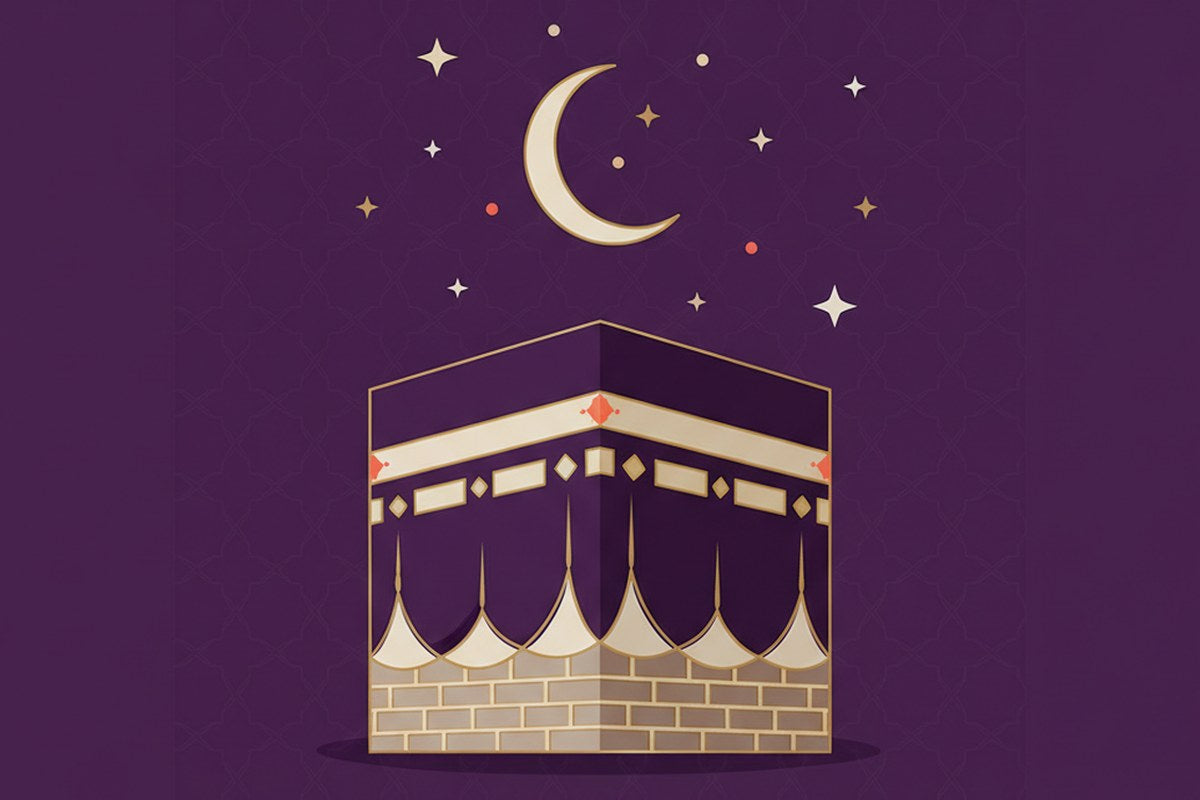
The Kaaba, this black cube located at the center of the Grand Mosque of Mecca, holds a central place in Islam. Long before the advent of this religion, it was already a sacred place for Arabs.
Notably, the three daughters of God were venerated there, symbols of pre-Islamic Arab spirituality. Its symbolic value did not fade with the arrival of Islam; quite the contrary.
Even today, every Muslim throughout the world turns toward the Kaaba to perform their daily prayers, regardless of where they are located. This practice testifies to the central role of the Kaaba in Muslim faith.
Furthermore, during the pilgrimage to Mecca, one of the pillars of Islam, pilgrims perform the Tawaf, which consists of circling the Kaaba seven times. The Kaaba therefore represents the focal point of the spiritual life of Muslims and has remained the principal pilgrimage center since the seventh century.
 Discover →To prepare for the HajjGuide Al Hajj et Al Umra: invocations and rites (Fr/Ar/phonetic) - Muhammed al-Jabiri - Sana3.50 €
Pilgrimage in Early Islam
In the early days of Islam, pilgrimage to Mecca was already an established practice and gained increasing importance through Quranic teachings.
Qur'anic Origin of Pilgrimage
The Qur'anic origin of pilgrimage to Mecca is found in several verses from the Median period. The pilgrimage, also called Hajj in Arabic, became This religious obligation was officially established by the Prophet Mohammed after his break with the Jews of Medina.
The Quran declares that the Kaaba, located in the heart of Mecca, is the holiest sanctuary of Islam and the starting point of the Hajj. The significance of the Kaaba dates back to the time of Ibrahim (Abraham), the Prophet who built this sanctuary with his son Ishmael.
By performing the Hajj, Muslims perpetuate this sacred tradition that connects Islam to Abrahamic beliefs.
Development of Rituals and Practices
The pilgrimage to Mecca is a ritual that has evolved and developed specific rituals and practices over time. Here are some key elements to know:
- Circumambulation of the Kaaba: During the pilgrimage, the faithful perform the Tawaf, which means they walk around the Kaaba seven times, considered to be the sacred House of God. This ritual symbolizes worship and humility before God.
- Running between Safa and Marwa: Pilgrims must also perform the Sa'i, which is a running between two hills, Safa and Marwa. This running commemorates the story of Ishmael and Hagar searching for water in the desert.
- Standing at Arafat: The main day of the pilgrimage is devoted to standing on the plain of Arafat. Pilgrims spend their day there in prayer and meditation, seeking forgiveness for their sins and imploring divine blessings.
- Stoning of the pillars representing Satan: After Arafat, pilgrims proceed to Mina where they throw seven small stones at three pillars representing Satan. This symbolizes the rejection of evil and resistance against temptations.
- Animal sacrifice: During the pilgrimage, the faithful also have the obligation to sacrifice an animal (a sheep or another suitable animal according to their means). This sacrifice recalls the story of Abraham who was ready to sacrifice his son Ishmael in obedience to God, before a sheep was sent as a substitute.
- Shaving or shortening of the hair: At the end of the pilgrimage, pilgrims must shave their head or cut their hair short. This symbolizes spiritual renewal and the affirmation of the completion of the pilgrimage.
The Abrahamic Anchor of Pilgrimage
Pilgrimage to Mecca finds its anchor in the Abrahamic tradition, with a close link between pilgrimage and the figure of Abraham and his son Ishmael.
Connection with the tradition of Abraham and Ishmael
The pilgrimage to Mecca is closely linked to the tradition of Abraham and his son Ishmael. According to Islamic accounts, Abraham was commanded by God to build the Kaaba in Mecca with the help of Ishmael.
The Kaaba is a sacred edifice that is considered the center of pilgrimage and worship for Muslims. Furthermore, the Station of Abraham, known as Maqâm Ibrahim, is a precious stone that is also venerated in Mecca because of its supposed traces of Abraham's footprints.
Thus, pilgrimage to Mecca allows the faithful to reconnect with this ancient tradition and honor the spiritual bonds between Abraham, Ishmael, and Islam.
Role of the Kaaba and the Zamzam Well
The Kaaba and the Zamzam well play a central role in pilgrimage to Mecca. The Kaaba, a cubic building located at the heart of the Grand Mosque, is considered to be the House of God in Islam.
Pilgrims turn towards it when performing their ritual prayer during the pilgrimage. The Zamzam well, for its part, is located near the Kaaba and is considered an Islamic miracle.
It is the same well that Abraham's wife, Hagar, discovered to quench the thirst of her son Ishmael. The pilgrims drink from this sacred well and often take it with them as a sign of blessing.
From the Middle Ages to the Modern Era
The pilgrimage to Mecca experienced significant growth during the Middle Ages and the modern era. Empires and caliphates became involved in the organization and security of the pilgrimage, thereby allowing a greater number of Muslims to participate each year.
Growth and Organization of the Pilgrimage
During the Middle Ages, the pilgrimage to Mecca experienced an impressive growth, attracting thousands of believers from around the world to fulfill this religious obligation. The routes leading to Mecca developed to facilitate travel, and infrastructure was put in place to welcome pilgrims.
Caliphates and empires also played a key role in organizing the pilgrimage, ensuring that the needs of pilgrims were met and that the ritual could take place safely.
Today, thanks to political and technological developments, the pilgrimage has become more accessible than ever, with millions of Muslims traveling each year to Mecca to fulfill their religious duty.
Involvement of Empires and Caliphates
The history of pilgrimage to Mecca has been closely linked to the empires and caliphates that marked Islamic history. European colonial empires such as France, Great Britain, and Italy played an important role in the perception and colonial imagination of pilgrimage to Mecca.
Their governments often viewed Muslim pilgrims as a suspect group, fueling a climate of panic and justifying surveillance and control measures. Furthermore, the fall of the Abbasid Caliphate of Baghdad in 1258 marked a turning point in the history of pilgrimage, with the establishment of a new power.
Islamic caliphates exercised considerable influence over the governance of their empires, but the specific details of their government varied depending on each caliph.
These empires and caliphates therefore had a significant impact on the development and organization of pilgrimage to Mecca over the centuries. Their political involvement influenced the perception of pilgrimage and sometimes led to restrictions or controls on Muslim pilgrims.
In Contemporary Times
During the contemporary era, the pilgrimage to Mecca has been influenced by political and technological developments, as well as by the rise of mass tourism and modern infrastructure.
Influence of Political and Technological Developments
Throughout the centuries, the pilgrimage to Mecca has been influenced by political and technological developments. These influences have changed the way pilgrims travel to Mecca and participate in the sacred rites.
For example, the arrival of modern transportation has facilitated travel to Mecca, making the pilgrimage more accessible to more people. Furthermore, the advent of social media and the Internet has enabled Muslims around the world to share their experiences and find valuable information about the pilgrimage.
Political developments have also played a role in organizing the pilgrimage. Local governments and religious organizations have worked together to put in place modern infrastructure in order to welcome the millions of pilgrims who travel to Mecca each year.
This includes the construction of residences, mosques and other facilities to ensure the comfort and safety of pilgrims.
It is important to note that despite these political and technological influences, the pilgrimage remains a deeply spiritual experience for participants. Modern developments have not altered the religious significance of the pilgrimage, but rather have facilitated its accomplishment for greater numbers of people.
Impact of Mass Tourism and Modern Infrastructure
Mass tourism and modern infrastructure have a significant impact on pilgrimage to Mecca. With the increase in the number of pilgrims each year, it has become essential to establish This led to the development of roads, hotels, health centers and other facilities necessary to make pilgrimage more accessible and comfortable.
However, the massive influx of pilgrims has also posed challenges. The Saudi authorities must manage the complex logistics of welcoming millions of people in a short period of time.
This includes traffic management, security, feeding and housing pilgrims. Furthermore, modern infrastructure has been criticized for its impact on the environment and world heritage properties.
Despite these challenges, mass tourism and modern infrastructure have enabled a greater number of Muslims to perform the pilgrimage and have facilitated their overall experience.
 Discover →Go FurtherThe Concise Biography of the Prophet (with illustrations) | Maison d'Ennour Editions3.50 €
The rites and practices of pilgrimage
The rituals of pilgrimage include key stages such as the Tawaf, which consists of circling the Kaaba seven times in a clockwise direction, and the Sa'i, a walk between the hills of Safa and Marwa in commemoration of Hajar searching for water for her son.
Tawaf, Sa'i, and Other Key Rituals
Tawaf, Sa'i and other key rituals are essential practices during the pilgrimage to Mecca. Here are some important facts to know:
- Al-Tawaf: This is one of the main rites of pilgrimage to Mecca. It consists of making seven rounds around the Kaaba, in a counterclockwise direction. Al-Tawaf is a form of circumambulation or walking in circles around the Kaaba.
- Al-Sa'i: After completing the Tawaf, pilgrims must perform the Sa'i. This involves traveling between the hills of Safa and Marwa and to cover the distance between them seven times. This ritual commemorates the episode where Hajar, the wife of Abraham, desperately searched for water for her son Ishmael.
- Other Key Rituals: In addition to the Tawaf and Sa'i, there are several other important rituals during pilgrimage. For example, pilgrims must spend a night in prayer on the plain of Muzdalifah and collect pebbles that will be used to symbolically stone Satan during the ritual called "Ramy".
- Pilgrim's Clothing: During pilgrimage, men wear a white garment called "ihram", which symbolizes the state of purity and humility required during this sacred period. Women also have specific clothing rules to follow.
-
Respect for Schedules and Sacred Places: It is crucial for pilgrims to Meanings and symbolism associated with each stage
Each stage of pilgrimage to Mecca is filled with deep meaning and symbolism for Muslims. The first ritual is Tawaf, which consists of circling the Kaaba seven times, the sacred house of God.
This circumambulation symbolizes worship and humility towards Allah, as well as the unity of the Muslim community that gathers around the Kaaba.
Then comes Sa'i, which is the journey between the hills of Safa and Marwa. This recalls the moment when the mother of Ismail, Hajar, desperately sought water for her son. Hajar's relentless search symbolizes unwavering faith in God and the importance of persevering in difficult times.
Another key ritual is the stoning of the pillars, which represents resistance against Satan. Pilgrims throw stones at three pillars as a sign of rejecting evil and temptation. This recalls Ibrahim's rejection of the devil when he was ordered to sacrifice his son.
This ritual teaches pilgrims to distance themselves from anything that may lead them away from the path of God.
Benefits Attributed to the Pilgrimage
The pilgrimage to Mecca is considered a profound spiritual experience that purifies the soul and strengthens the faith of believers.
Spiritual and Purifying Dimension
The pilgrimage to Mecca is a deeply spiritual and purifying experience for Muslims. It offers a unique opportunity for renewal and drawing closer to God. During the pilgrimage, believers detach themselves from the material concerns of daily life and devote themselves entirely to their relationship with God.
They spiritually purify themselves through prayer, meditation, and repentance for their sins. Furthermore, pilgrimage allows Muslims to feel connected to the entire global Muslim community.
By mingling with millions of other pilgrims from around the world, they experience a profound sense of brotherhood and unity in their faith. Pilgrimage is a personal experience that can have a transformative impact on a believer's life, strengthening their religious devotion and commitment to the teachings of Islam.
Unity and Brotherhood Among Muslims
The pilgrimage to Mecca promotes great unity and brotherhood among Muslims throughout the world. This sacred event brings together millions of believers each year, coming from every corner of the globe.
In walking together around the Kaaba, in performing the same rituals and in sharing moments of intense prayer, pilgrims experience a deep spiritual solidarity.
Pilgrimage creates bonds that transcend cultural and ethnic boundaries, uniting all Muslims in a community founded on shared faith in Allah. This unique experience strengthens the unity of the ummah (Muslim community) and reminds pilgrims of their belonging to a global community.
The pillars and duties of pilgrimage
The pillars of pilgrimage to Mecca are the affirmation of faith, prayer, fasting, almsgiving, and the Hajj itself.
Religious Obligations and Recommendations
Pilgrimage to Mecca is a religious obligation for Muslims and it entails several important obligations and recommendations. Here is what you need to know:
- Enter into a state of sacralization : Before beginning the pilgrimage, pilgrims must enter into a sacred state called "ihram". This involves wearing specific garments, avoiding certain forbidden behaviors (such as hunting or intimate relations) and focusing on devotion to Allah.
- Stand at Arafat : During Hajj, it is essential to spend a day at Arafat, a plain located near Mecca. Pilgrims must remain there until sunset and dedicate their time to prayer, meditation, and supplication.
- Visit the sacred places : During the pilgrimage, pilgrims must also visit various sacred sites around Mecca, such as the Sacred Mosque, the Kaaba, and the Well of Zamzam. These visits are considered a great honor and an important spiritual opportunity.
- Follow Quranic teachings : Pilgrims are encouraged to meditate on the teachings of the Quran during their stay in Mecca. This includes reciting relevant Quranic verses and applying the moral teachings in their daily lives.
- Practice Islamic ethics : During the pilgrimage, it is crucial to respect the principles of Islamic ethics. This involves being respectful toward other pilgrims, avoiding verbal or physical violence, and conducting oneself with humility and modesty.
- Observe the fast of the Day of Arafat : On the day when pilgrims stand at Arafat, it is recommended for those not performing Hajj to fast on that day. This is a practice that allows people who cannot perform Hajj this year to obtain similar spiritual rewards.
- Respect local traditions : During the pilgrimage, it is important to respect the customs and traditions of Mecca and its surroundings. This includes respecting appropriate dress codes, observing specific schedules for certain rituals, and accepting cultural differences.
- Conditions and Requirements for Performing Pilgrimage
To be able to perform the pilgrimage to Mecca, there are certain conditions and requirements that must be met. Here is what you need to know:
- Being a Muslim: Pilgrimage to Mecca is a religious obligation for Muslims, so one of the main conditions is to be of Muslim faith.
- Being in good health: It is important to be physically able to perform the pilgrimage, as it involves long walks, demanding rituals, and sometimes difficult climatic conditions.
- Being financially capable: The pilgrimage to Mecca can be costly due to travel, accommodation, and meal expenses. Therefore, it is essential to have the necessary financial resources to be able to fulfill this obligation.
- Having reached the age of religious maturity: The pilgrimage is not obligatory for children, but for adults who have reached the age of religious maturity, that is, puberty according to Islamic teachings.
- Not being in debt: It is recommended that those who wish to perform the pilgrimage should not be in debt, so they can fully focus on their spiritual experience without financial stress.
- Having sufficient time: Hajj requires several days or weeks depending on the type of pilgrimage chosen (Hajj al-Ifrad, Hajj al-Qiran, or Hajj al-Tamattu). Therefore, it is important to have sufficient time to travel to the holy sites, perform the rituals, and return home.
-
Obtaining a pilgrimage visa: To be able to enter Saudi Arabia and perform the pilgrimage, it is mandatory to obtain a pilgrimage visa issued by Saudi authorities
The Pilgrimage in Numbers
The pilgrimage to Mecca welcomes approximately 2.3 million pilgrims each year, making the Hajj one of the largest religious gatherings in the world.
Statistics on the number of pilgrims
The number of pilgrims performing the pilgrimage to Mecca has increased significantly over the years.
Year Number of Pilgrims 2005 1,934,829 2010 2,511,500 2015 2,000,000 2018 In 2019, an infographic published on Al-Kanz presented the number of pilgrims who performed the pilgrimage to Mecca. Furthermore, approximately 1.4 million pilgrims arrive from abroad each year to participate in the Hajj pilgrimage to Mecca. Economic and Logistical Impact of the Pilgrimage
The economic and logistical impact of the pilgrimage to Mecca is substantial. This includes not only the revenues generated by millions of pilgrims who come each year, but also the
Economic Aspect Logistical Aspect The pilgrimage to Mecca is a major source of revenue for Saudi Arabia, ranking just after the petroleum industry. The pilgrimage involves a major logistical challenge due to the massive number of people converging on the same location. The religious tourism linked to the pilgrimage to Mecca attracts millions of pilgrims each year, strengthening the Saudi economy. The organization and management of these large crowds' movements require precise and rigorous logistical planning. Saudi authorities benefit from a perpetual financial windfall thanks to the pilgrimage to Mecca. Transportation, accommodation, and health infrastructures must be adapted to handle the influx of pilgrims during the pilgrimage It is clear that pilgrimage to Mecca has a significant economic and logistical impact not only for Saudi Arabia, but also for the entire Muslim world.
Frequently Asked Questions
2. How long does the pilgrimage to Mecca last?
The pilgrimage to Mecca generally lasts approximately five days. However, this can vary depending on the different stages and rituals of the Hajj.
3. What are the key rituals of pilgrimage to Mecca?
The key rituals of pilgrimage to Mecca include the Tawaf, which is the circumambulation of the Kaaba seven times, as well as the Sa'i, which is the running between the hills of Safa and Marwa. There is also the stay in Mina and Arafat, as well as the stoning of Satan symbolized by throwing pebbles at the pillars in Mina.
4. How has the pilgrimage to Mecca evolved over the years?
The pilgrimage to Mecca has evolved considerably over the years. Once a long and arduous journey, it is now much more accessible thanks to advances in transportation and infrastructure. Furthermore, measures have been implemented to improve the safety and well-being of pilgrims.
📚 Also read
۞−5 % off the entire library with code BLOG5
Valid on the entire site, with no minimum purchase — our thanks to blog readers.
Discover the selectionTags: Pèlerinage- Opens in a new window.