Table of Contents and Content of the Nourania Method Book: Program, Stages and Objectives
In Brief
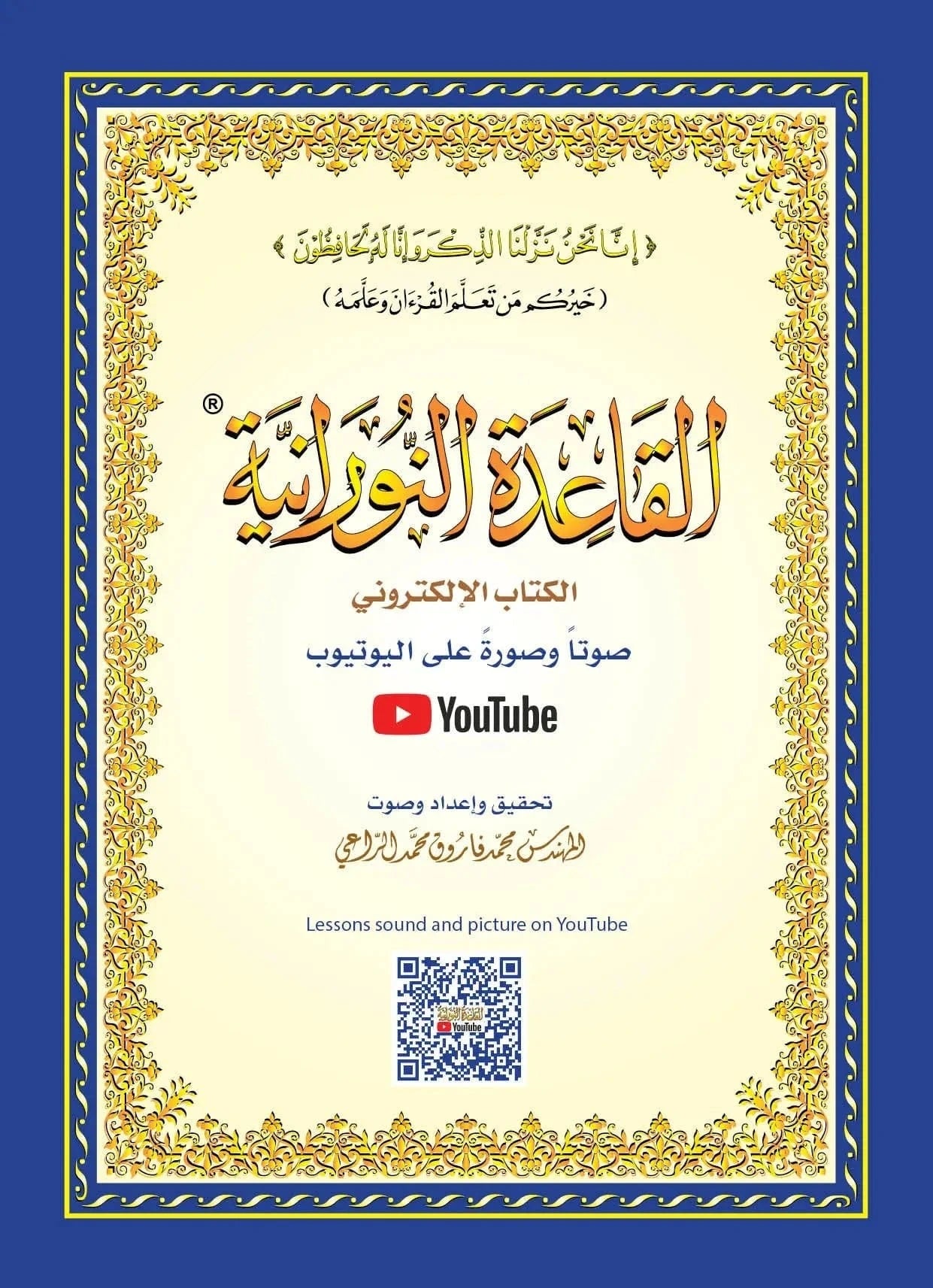
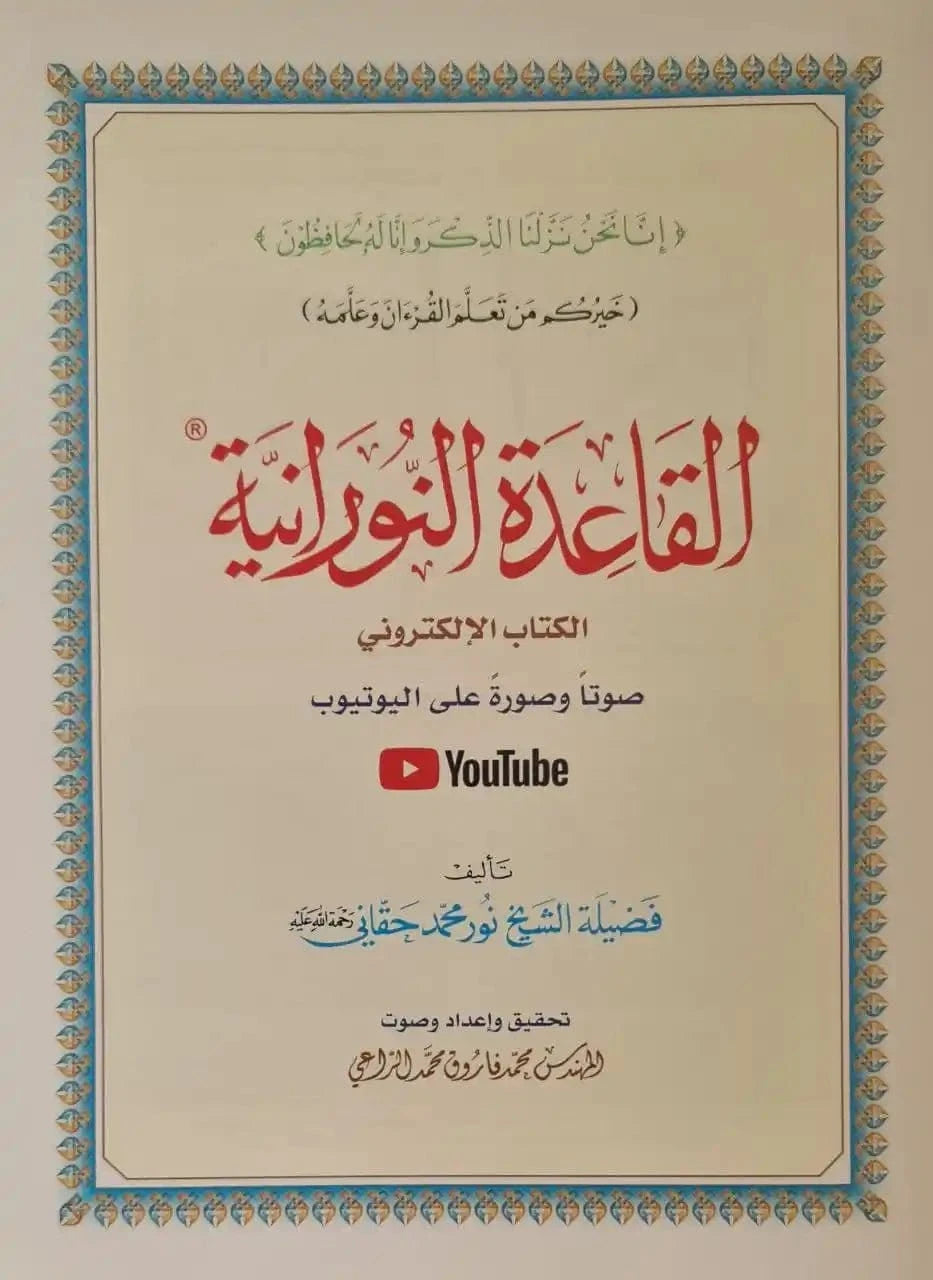
This detailed article covers the complete table of contents and pedagogical progression of the Nourania Method book. You will discover the 17 lessons that make up the Nourania Qaida, from learning isolated letters with their forms and sounds to reading complete Quranic verses with tajwid.
For each chapter, we explain the pedagogical objective, the skills acquired and the points of attention for the learner. This detailed pathway allows you to understand the logic of the method's progression and estimate the time needed for each stage. Tips for optimizing each lesson and avoiding common mistakes accompany this commented table of contents.
Before purchasing your Nourania Method book, it is useful to understand exactly what you will find inside and how the book is organized. This guide details the complete structure of the book, the step-by-step progression, and explains how skills accumulate.
Discover the detailed table of contents, typical exercises, and strategies to get the most out of your القاعدة النورانية. An understanding of the program accelerates your learning and increases your motivation.

Overall structure of the book: how the book is organized
Introduction and basic instructions
The book begins with a clear introduction (often in French if it is a French-language edition) explaining:
- How to use the book effectively
- The recommended progression (30 minutes per day)
- How to pronounce certain difficult sounds
- The diacritical marks used in the book
This introduction is crucial - read it carefully even if it seems obvious.
Progressive educational units
The book is divided into logical units, each building on the previous one. The first 4-6 units cover isolated letters, then the following units progressively combine letters into syllables, then into words, then into Quranic phrases.
Practical exercises after each unit
After each major concept, exercises allow you to practice and consolidate. These exercises are not optional - they are essential for building memorization.
Review and consolidation
The final sections of the book offer complete Quranic verses to practice all the concepts learned. This is where you read "for real" after mastering the foundations.

The Nourania Method applied to the Quarter Yassin
12,00 EUR
View the productSkills Developed by Section
First Part: Isolated Letters
You learn the 28 Arabic letters in logical groups, not alphabetically. The progression is based on the similarity of sounds and shapes. For example:
- Group 1: Simple sounds like ا ب ت (alif, ba, ta)
- Group 2: Similar sounds like ث ج ح (tha, jeem, ha)
- Group 3: More difficult guttural sounds like ع غ (ayn, ghain)
Each letter is presented in three positions: beginning of word, middle, end. You learn that ب (ba) at the beginning looks like ـب (ba) in the middle, which looks like ـب (ba) at the end. Recognizing these variations is fundamental.
Second Part: Vowels and Diacritical Marks
Once consonants are mastered, you learn the short vowels:
- فتحة (fatha): the "a" sound
- كسرة (kasra): the "i" sound
- ضمة (damma): the "u" sound
And the signs that modify sounds:
- شدة (shadda): doubled letter
- سكون (sukun): no vowel after the letter
Mastering diacriticals is crucial because they completely change pronunciation.
Third Part: Assembly into Syllables
You now combine letters and vowels to form real syllables. Exercises like:
- با بي بو (ba, bi, bu)
- تا تي تو (ta, ti, tu)
This is a crucial turning point - you begin to read "for real".
Fourth Part: Complete Words
You now read complete words, first simple then progressively complex:
- Short words: ماء (water), نور (light)
- Medium words: كتاب (book), معلم (teacher)
- Long and complex words: الحمد لله (praise be to Allah)
Fifth Part: Quranic Verses and Consolidation
The last sections present authentic verses from the Quran, beginning with the simplest (Fatiha) and progressing toward longer verses. This is the validation that everything works - you are truly reading the Quran.

The Nourania Method & Its Application to juzz Amma
5,00 EUR
View ProductTypical exercises and how to do them effectively
Typical exercise 1: reading and recognition
"Read these isolated letters and pronounce the sound"
How to do it:
- Read slowly each letter out loud
- Pronounce clearly, emphasize articulation
- Verify with an audio or a teacher
- Repeat 5 times each letter
Typical exercise 2: sound combination
"Assemble these sounds into a syllable"
ب + ا = با (b + a = ba)
How to do it:
- Pronounce the first sound slowly
- Continue to the second sound without pause
- Then, pronounce the two assembled
- Repeat quickly 5 - 10 times
Typical exercise 3: word reading
"Read these words"
How to do it:
- Read the word letter by letter
- Then reread the entire word
- Repeat 3 - 5 times until fluency
- Verify the pronunciation with an audio or teacher
Typical exercise 4: dictation
"Listen and write"
How to do it:
- Listen to the word/syllable on the audio
- Write what you hear
- Verify with the book or the audio
- Correct your errors
Revision Strategy: How to Consolidate and Retain
The "Spaced Repetition" Cycle
Do not revisit a lesson only once. Use this schedule:
- Day 1: Learn the lesson
- Day 2: Review the lesson
- Day 3: Review + include the new lesson
- Day 5: Review the old concepts + new content
- Week 2: Review lessons 1 - 3, then learn lesson 4
This "spaced repetition" strategy is scientifically proven to maximize retention.
Recommended Pace
Minimum: 30 minutes per day, 5 days per week = Progress in 8 weeks
Optimal: 45 - 60 minutes per day = Progress in 4 - 5 weeks
Intensive: 1 - 2 hours per day = Progress in 2 - 3 weeks (but lower retention rate)
Consistency surpasses intensity. 30 minutes daily delivers better results than 3 hours once a week.
Common Mistakes and How to Correct Them
Mistake 1: Confusion between similar letters
Problem: Confusing ح (ha) with خ (kha) or ع (ayn) with غ (ghain).
Solution: Focus on articulation, not visual form. Listen to the audio multiple times. Pronounce slowly and feel the position of your tongue.
Mistake 2: Ignoring diacritics
Problem: Reading a letter without looking at the diacritical marks, resulting in incorrect pronunciation.
Solution: NEVER skip the accents. A ّ (shadda) completely changes the sound. Check every diacritic.
Mistake 3: Progressing too quickly
Problem: Skipping lessons because you find the pace too slow.
Solution: Follow the order even if it seems too easy. The "easy" lessons lay the foundation for the difficult ones.
Mistake 4: No audio feedback
Problem: Learning alone without hearing how it is really pronounced.
Solution: Use an audio CD or an application to check your pronunciation.
How to Follow the Book with a Teacher or Audio
With a teacher (ideal)
- The teacher covers each lesson (15 - 20 minutes)
- You practice and read (10 - 15 minutes)
- The teacher corrects your pronunciation immediately
- He gives homework for the next session
- Frequency: 2 - 3 times per week = optimal progress
With audio and self-study
- You read the lesson introduction in the book
- You listen to the audio pronouncing the sounds
- You repeat after the audio (shadowing method)
- You practice the exercises in the book
- You review in the following days
With a teacher + audio (ideal + economical)
A teacher once a week + audio for the other days = perfect balance between expert correction and self-study learning.

FAQ: Questions about Structure and Content
How many pages does the book have?
Standard editions have between 40 - 60 pages. The small format is more visually dense; the large format is more spacious. Despite its relative brevity, the content takes 4 - 8 weeks to master - quality over quantity.
Is there a translation of the Quranic verses?
Most French editions do not include a translation - the book focuses on READING, not comprehension. You can search for translations separately if you wish to understand the meaning. It is normal to read without understanding at first.
Are the exercises mandatory?
Yes, absolutely. The exercises are not optional - they are what consolidate learning. Completing the book WITHOUT doing the exercises means going approximately 50% slower. Do all exercises without exception.
Can I learn by reading alone, without audio or a teacher?
Theoretically yes, but it is difficult because you cannot verify if your pronunciation is correct. You may memorize incorrect sounds. Audio (6 EUR) or a few sessions with a teacher (20 - 30 EUR) accelerate learning greatly and prevent problems.
The investment is worth it.
How difficult is the book?
The book is not "difficult" - it progresses deliberately from simple to complex. The first pages are very easy (recognizing letters). It is around weeks 4 - 5 that the challenges increase with combinations and words.
The progression ensures that each step prepares the next.
Nourania or Qaida Baghdadiya: which one to choose?
Qaida Baghdadiya is older and more popular in Maghreb countries. Nourania is more structured with its 17 progressive lessons and integrates tajweed from the beginning. If you aim for Quranic reading with tajweed, Nourania is more complete. If you grew up with Baghdadiya and just want to review the basics, it can be sufficient. The two methods are not incompatible.
Can Nourania be combined with a mobile application?
Yes, it is even recommended. Applications such as "Nourania Interactive" or online platforms complement the paper book. The application allows you to practice pronunciation with immediate audio feedback. The book remains essential for structured progression, but the application adds interactivity and the possibility of practicing independently between lessons.
Key Takeaways
- With this clear understanding of the structure and content of the Nourania Method book, you are ready to begin with confidence. The book is intelligently organized for easy progression, and the content covers exactly what you need to go from zero to fluent Quran reading.
- Now that you understand the program, order your copy and begin your journey. Also explore the complementary resources and audio tools to optimize your learning.
Apply these concepts to strengthen your understanding and progress in your learning journey.
With this clear understanding of the structure and content of the Nourania Method book, you are ready to begin with confidence. The book is intelligently organized for easy progression, and the content covers exactly what you need to go from zero to fluent Quran reading.
Now that you understand the program, order your copy and begin your journey. Also explore the complementary resources and the audio tools to optimize your learning.
Main Guide
Related Articles
📚 Also Read
−5% off entire library with code BLOG5
Valid on the entire site, with no minimum purchase — our thanks to blog readers.
Discover the selection